
Castle Rock, Colorado
Embroidery or DTF for hats, polos and quarter-zips?
If you came looking for embroidery, this page is the honest version of why I print instead — including the cases where embroidery is genuinely the right call and I'd send you elsewhere.
The short answer
For most branded apparel, I think DTF is the nicer product
Embroidery became the default for corporate apparel decades ago, when the alternative was a thick plastisol print. That comparison is out of date. The question now is whether you want your logo stitched or printed, and on a polo, a cap or a quarter-zip I think printed wins on nearly everything that matters — color, detail, weight, and how the garment feels to wear.
The honest exception is texture. Embroidery is raised and dimensional, and if that is the specific thing you want, no print will give it to you. Thread is also the right answer for uniforms that get industrially laundered. Neither of those describes most company polos.
Side by side
Where each one actually wins
Two of these rows go to embroidery. I've left them in because pretending otherwise would make the rest of the page worth less.
| DTF printing | Embroidery | |
|---|---|---|
| Color and detail | Unlimited colors, gradients, photographic detail, small text that stays readable. | Limited to thread colors. Fine detail and small text fill in; gradients are not possible. |
| Your logo, reproduced | Printed exactly as drawn, in your brand colors. | Digitized into stitch paths — an interpretation of the logo, not a reproduction. |
| Weight and hand | Thin and flexible. Adds almost nothing to the garment. | Thick and stiff, with backing behind it. Can pucker on lightweight fabric. |
| Against the skin | Nothing on the inside of the garment. | Stabilizer sits behind the stitching. Some people find it scratchy. |
| Performance fabrics | Bonds to the surface without piercing the fabric. | The needle perforates the fabric, which matters on technical and moisture-wicking gear. |
| Setup costs | No digitizing, no setup fee, no minimum. | Digitizing fee per logo, and pricing scales with stitch count — big logos cost more. |
| Texture | Flat. It looks printed, because it is. | Raised and dimensional. If that texture is what you want, nothing else gives it to you. |
| Hard-wearing extremes | Holds up well to normal wear and washing when it is applied properly. | Thread is exceptionally durable — the usual choice for uniforms that get industrially laundered. |
Not sure how your logo would look printed rather than stitched? Describe it and the chat will tell you straight. Ask about your garment →
By garment
Everything embroidery normally goes on
These are the pieces people arrive asking to have embroidered. All of them are ordinary DTF work here.
Hats
Curved and structured caps both take DTF cleanly, including across seams where a hoop would struggle. Full-color logos on a cap are where the difference is most obvious.
Polos
The garment embroidery is most associated with, and the one it suits least. A stitched left chest on a lightweight polo is where puckering shows up — DTF stays flat and doesn't distort the placket.
Quarter-zips
Usually a fleece or performance knit, so not piercing the fabric matters. Left chest, sleeve, or across the back all work.
Jackets and softshells
Technical shells are exactly where a needle is the wrong tool. DTF bonds to the surface and leaves the weatherproofing intact.
Bags and totes
Flat panels take a full-color print with no hooping limits and no stitch-count bill.
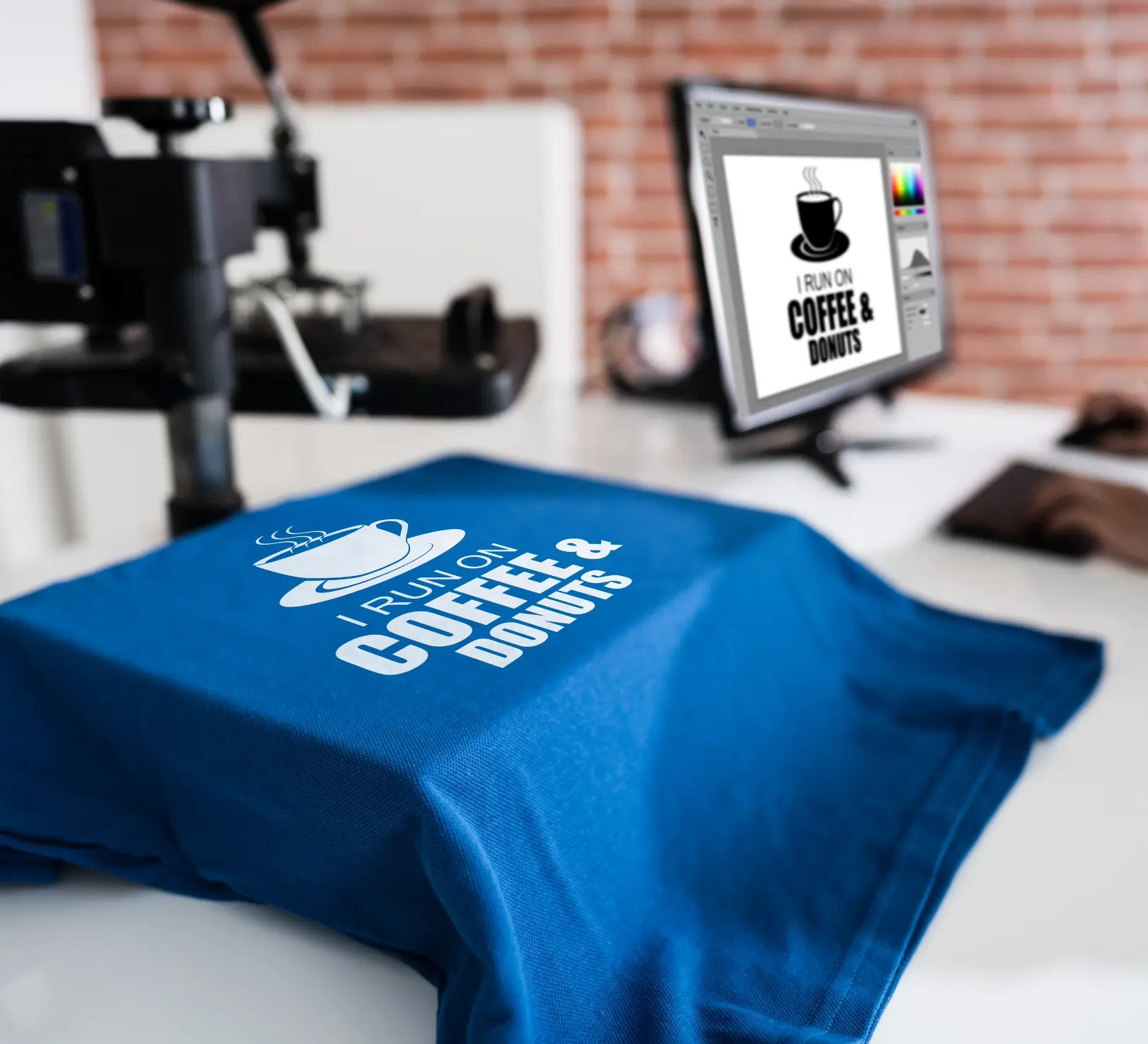
DTF transfers have no minimum and no setup fee, so one hat is a real order.
When I'd send you elsewhere
Two cases where embroidery is the right answer
You want the texture
Raised stitching reads as traditional and substantial, and some brands want exactly that. A print cannot imitate it, and I won't pretend otherwise.
Industrial laundering
Uniforms washed commercially at high heat, over and over, are what thread is best at. If that's your situation, go stitched.
Outside those two, I'd back a print. If you want the longer explanation of the method itself, that's on what is DTF.
Questions
What people ask before switching
Do you offer embroidery at all?
No. It's a deliberate choice rather than a missing machine — I don't think it produces the better result on the garments people usually ask for it on. If stitched texture is specifically what you're after, I'd rather point you to a shop that does it well.
Will a DTF print peel off my polo?
Not when it is applied properly and washed sensibly — inside out, cold, and out of the dryer where you can. The failures people remember usually come from under-pressed transfers rather than from the method.
Is DTF cheaper than embroidery?
Usually, and for two reasons that have nothing to do with the print itself: there is no digitizing fee per logo, and the price does not climb with stitch count. A large or detailed logo is where the gap is widest.
Can you match my brand colors exactly?
Yes. DTF prints in full color, so your logo comes out as drawn rather than approximated with the closest available thread.
Is there a minimum for hats or polos?
No. DTF has no minimum at all, so a single hat is a real order. Screen printing is the one with a minimum, currently 20 pieces per design.
See what your hats or polos would cost
Pick the garment, upload your logo, and the price appears — no minimum on DTF, so one piece is a real order.